



University of Pittsburgh startup wants to innovate wound care with zebrafish
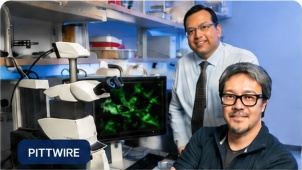
Researchers at the University of Pittsburgh are exploring how zebrafish could unlock new possibilities in wound healing and regenerative medicine.
A first-in-class, shelf-stable small-molecule therapeutic engineered to accelerate healing in chronic and complex wounds — biologic-level efficacy, small-molecule simplicity, and ambient-temperature deployment, anywhere on Earth.
The composition of Zegenex wound healing approach has secured the US Full Patent (University of Pittsburgh)
Transforming outcomes for millions with a novel, science-backed healing solution.
Addressing a high-growth $14.5B (2025) market reaching $25B+ by 2032 within a $22–27B overall sector.
18.6M global patients; 1.6M in the US facing non-healing ulcers and severe amputation risk.
Acceleration vs. vehicle control in preclinical excisional models (Day 7).
Upstream master activator avoiding receptor desensitization.
Over 8.2 million Americans live with chronic, non-healing wounds. The current standard of care fails one in four — leading to amputation, systemic infection, and avoidable mortality.
Existing growth-factor biologics like becaplermin require strict refrigeration and have hours-long stable life once reconstituted — making them virtually impossible to deploy in rural, military, or low-resource emergency settings.
External biologics suffer from rapid receptor downregulation and feedback inhibition. 94% of US DFU patients never receive advanced therapy, relying on basic dressings that fail to rescue stalled biological pathways.
Cellular and tissue-based products cost $5,000–$15,000 per course and require specialized clinical prep. This extreme price tag makes them inaccessible for the vast majority of global healthcare systems.
Our proprietary small molecule activates upstream regulators of the body's natural healing cascade — driving rapid keratinocyte proliferation, capillary angiogenesis, and organized re-epithelialization through a mechanism never previously exploited by an approved therapeutic.
Amplifies endogenous tissue-repair cascades rather than dumping fragile external growth factors.
>95% potency at 25°C for 24+ months; withstands extreme heat spikes without degradation.
Manufactured at a fraction of recombinant biologic bioreactor costs.
Topical hydrogel, bio-resorbable film, aerosolized spray, or injectable depot.
Built on rigorous cellular biology, validated across animal models, and engineered for scalable real-world application.
A novel molecular target with no approved therapeutic in the space — providing a pristine IP runway and category-defining commercial potential.
Complete preclinical package: in-vitro efficacy across 3 human cell lines, murine diabetic models, non-GLP pig tox, and ICH-compliant stability.
Zero cold-chain dependence. Unlocks global distribution across retail pharmacies, rural outpatient clinics, defense triage, and emerging markets.
Chemical small-molecule synthesis yields 85%+ gross margins at scale, enabling disruptive pricing and high profitability.
Lead program in DFU, followed rapidly by venous leg ulcers, deep burn trauma, post-surgical dehiscence, and military field triage.
Granted composition-of-matter patents in the US and key international jurisdictions with patent protection extending into the 2040s.
Structured clinical development designed for capital efficiency and rapid regulatory milestones.
Murine efficacy, cellular target validation, formulation stabilization, non-GLP safety studies.
Porcine GLP toxicology, CMC scale-up, FDA pre-IND briefing submission.
First-in-human open-label safety, tolerability & preliminary wound closure rate in DFU patients.
180-patient randomized controlled trial vs standard of care; global commercial partnership.
From transgenic zebrafish genetic assays at the University of Pittsburgh to shelf-stable formulation science and direct point-of-care delivery.
Translational origins from the University of Pittsburgh and IND-enabling clinical development for chronic diabetic ulcers.
A comprehensive overview of ZegeneX Therapeutics' revolutionary small-molecule regenerative wound healing platform, its translational origins at the University of Pittsburgh, and upcoming IND-enabling clinical trajectory for diabetic foot ulcers.
Exclusive footage inside the University of Pittsburgh developmental biology laboratories showcasing high-throughput transgenic zebrafish genetic assays, fluorescent biosensors, cellular re-epithelialization imaging, and topical hydrogel formulation science.
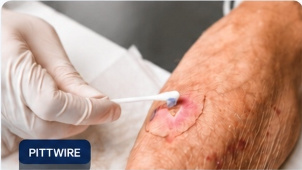
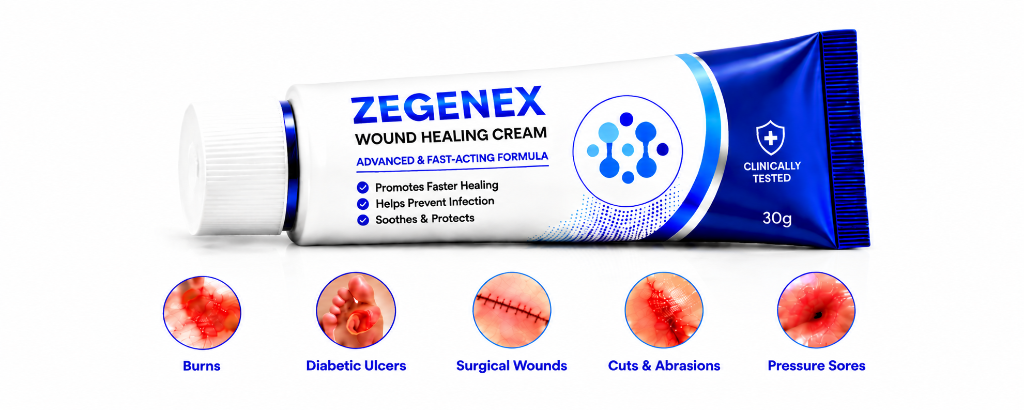
Detailed demonstration of the ambient-stable topical application mechanism for Zegen-X5, demonstrating simple point-of-care application for chronic wound beds without requiring cold-chain refrigeration or complicated reconstitution.
Discover breakthroughs, stories and perspectives shaping the future of wound care and regenerative medicine.
Researchers at the University of Pittsburgh are exploring how zebrafish could unlock new possibilities in wound healing and regenerative medicine.
A closer look at how zebrafish research is helping scientists understand complex healing processes — and what it could mean for future treatments.
The event highlighted groundbreaking research, innovation and the growing entrepreneurial ecosystem at Pitt.
Get the latest research news, clinical insights and company updates delivered to your inbox.
We work with strategic biopharma partners, foundation grants, and visionary investors who share our conviction that healing should be universal — not constrained by infrastructure, refrigeration, or geography.