Zegen-X5: Engineered for
Universal Clinical Access.
A chemically synthesized, room-temperature stable small-molecule therapeutic formulated to accelerate physiological tissue repair across chronic, acute, and emergency wounds.
How Zegen-X5 Accelerates Healing
Wound healing follows a coordinated 5-phase biological cascade. In chronic and severe injuries, this cascade stalls at the inflammation phase. Zegen-X5 unlocks tissue regeneration to drive complete, scarless closure.
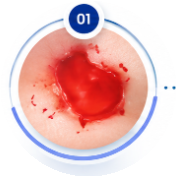
Bleeding
Hemostasis & Vascular ConstrictionPlatelet aggregation forms the primary fibrin clot to arrest hemorrhaging and release chemotactic growth factors.
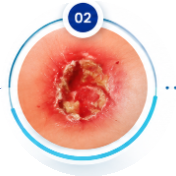
Swelling & Inflammation
Debridement & Immune DefenseNeutrophils and M1 macrophages clear necrotic debris and pathogens. In chronic wounds, tissue stalls here.
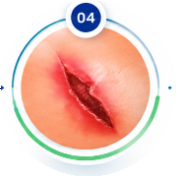
Tissue Regeneration
Cell Proliferation & AngiogenesisZegen-X5 inhibits DUSP6, reactivating MAPK/ERK phosphorylation to multiply keratinocytes and capillary budding.
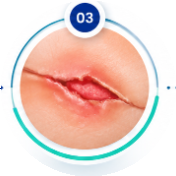
Wound Contraction
Myofibroblast Centripetal PullMyofibroblasts attach to ECM collagen fibrils, pulling wound margins inward to rapidly reduce wound surface area.
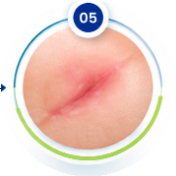
Healed Skin
Collagen Matrix MaturationType III collagen remodels into high-tensile Type I bundles, restoring full barrier function and normal dermal architecture.
Vascular Spasm, Platelet Plug & Primary Hemostasis
Upon mechanical disruption of dermal capillaries, circulating platelets adhere to exposed subendothelial collagen. Degranulation releases PDGF, TGF-β, and fibronectin, establishing the foundational temporary fibrin matrix.
Macrophage Polarization & Pathogen Decontamination
Neutrophils engulf invading bacteria and release proteases. Monocytes differentiate into M1 inflammatory macrophages. In diabetic and chronic ulcers, persistent hyper-inflammation locks the wound in this phase, suppressing regeneration.
DUSP6 Phosphatase Inhibition & Upstream Kinase Activation
Zegen-X5 specifically blocks the negative regulator DUSP6 (Dual-Specificity Phosphatase 6). This sustains ERK1/2 kinase signaling, dramatically accelerating keratinocyte proliferation, dermal fibroblast migration, and VEGF-mediated capillary neoangiogenesis across the wound bed.
Myofibroblast α-SMA Expression & Edge Approximation
Fibroblasts differentiate into alpha-smooth muscle actin (α-SMA)-positive myofibroblasts. By exerting contractile mechanical forces on surrounding provisional matrix, they bring opposing wound margins into close proximity to minimize open surface area.
Intact Epidermal Barrier & Enhanced Tensile Strength
Final re-epithelialization seals the dermal envelope against environmental pathogens. Collagen bundles reorganize parallel to skin tension lines, restoring ~80% of native uninjured tensile strength while minimizing hypertrophic scar formation.
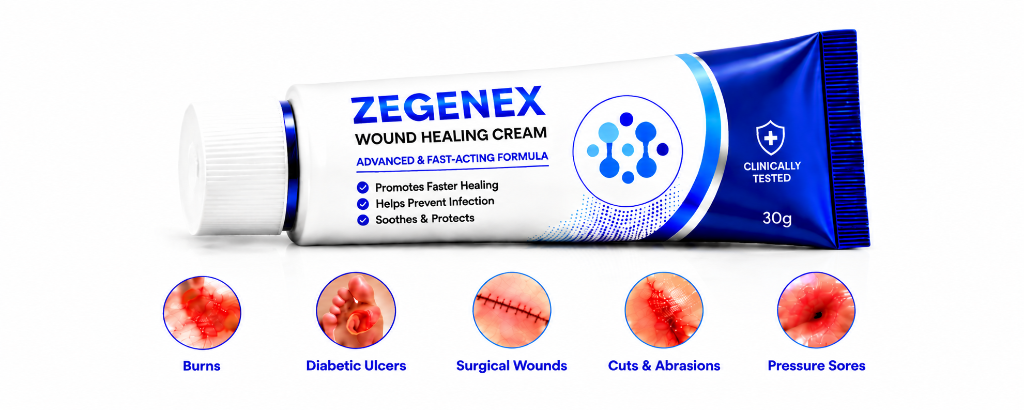
Where Zegen-X5 Works
Because Zegen-X5 targets the universal upstream molecular driver of cell proliferation, its therapeutic mechanism applies broadly across severe chronic wounds, thermal trauma, and acute surgical disruptions.
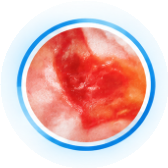
Burns
Thermal burns, scalding injuries, and radiation burns. Accelerates re-epithelialization across deep partial-thickness wounds while suppressing scarring.
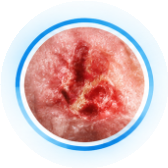
Diabetic Ulcers
Chronic neuropathic & ischemic diabetic foot ulcers (DFU) that fail standard wound care. Overcomes local glucose-induced senescence.

Surgical Wounds
Post-operative incisions, compromised surgical flaps, and surgical dehiscence. Provides rapid tensile strength recovery and reduces infection rates.
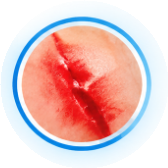
Cuts & Abrasions
Traumatic skin tears, extensive friction burns, high-impact athletic abrasions, and military field triage lacerations.
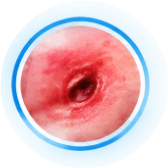
Pressure Sores
Stage II–IV decubitus ulcers and venous stasis ulcers in bedridden, elderly, and spinal cord injury hospital populations.
Single Chemical Entity · Multiple High-Value Indications
By starting with Diabetic Foot Ulcers (ZGX-101) as the regulatory anchor, ZegeneX establishes clean safety and biological proof-of-concept to rapidly expand into burns, post-surgical care, and military emergency medicine.
Tailored Drug Delivery Formats
Engineered for rapid tissue bio-distribution and sustained cellular activation across distinct clinical indications.
Topical Hydrogel
Biocompatible, high-viscosity hydrogel matrix optimized for daily or twice-weekly application onto diabetic foot ulcers. Accelerates physiological re-epithelialization while maintaining optimal wound moisture balance.
Bio-Resorbable Matrix Film
Thin, self-dissolving bioactive polymer sheet tailored for multi-layer compression wrap application in venous leg ulcers. Delivers sustained small-molecule release and eliminates painful dressing peel-off trauma.
Aerosolized Bioactive Spray
Touchless spray application for acute thermal burns, extensive abrasions, and military point-of-injury triage where physical wound contact is contraindicated and cold storage is nonexistent.
Investigational Biological Validation
Competitive Landscape Matrix
Detailed comparison of therapeutic attributes against standard modalities in advanced wound care.
| Feature | Zegen-X5 | Regranex (Becaplermin) | Cellular Tissue (CTPs) | NPWT (Wound Vac) |
|---|---|---|---|---|
| Mechanism | Upstream Cascade Activator | Recombinant rhPDGF-BB | Allogeneic Living Cells | Mechanical Suction |
| Storage Requirements | Ambient (25°C), 24+ Mo (ICH Q1A) | Refrigerated (2°C–8°C) | Cryopreserved (-80°C) | Device Hardware |
| Course Cost | Accessible / High Margin (85%+) | $1,200–$1,800 | $5,000–$15,000 | $3,000–$8,000 |
| Ease of Application | Simple topical application | Daily clinic prep | Surgical graft / sutures | Canister & tubing pump |
| Global Field Deployability | Yes (Any climate or setting) | No (Cold chain dependent) | No (Tertiary hospital only) | Power outlet dependent |